
Evidence, daily ritual, safety
Turmeric for Inflammation: Uses, Evidence, and How to Take It
Turmeric contains curcumin, a naturally occurring polyphenol studied in nutrition research. This guide explains the research context, daily culinary use, and basic safety considerations.
This guide summarises what the evidence actually shows, how curcumin works at a biological level, and practical ways to incorporate it into a daily routine without overstating what science has and has not established.
For the full overview of turmeric's health profile, start here: The Complete Guide to Turmeric Benefits.
How Curcumin Is Studied
Curcumin is the main golden polyphenol in turmeric. Researchers study it in cell, animal, supplement, and food-context trials, but results depend heavily on dose, formulation, and study design.
- Plant compound: Curcumin is one of several curcuminoids that give turmeric its colour.
- Food matrix: Powder, tea, capsules, and extracts are not interchangeable.
- Culinary context: In everyday cooking, turmeric is best described as a spice with colour, aroma, and traditional use.
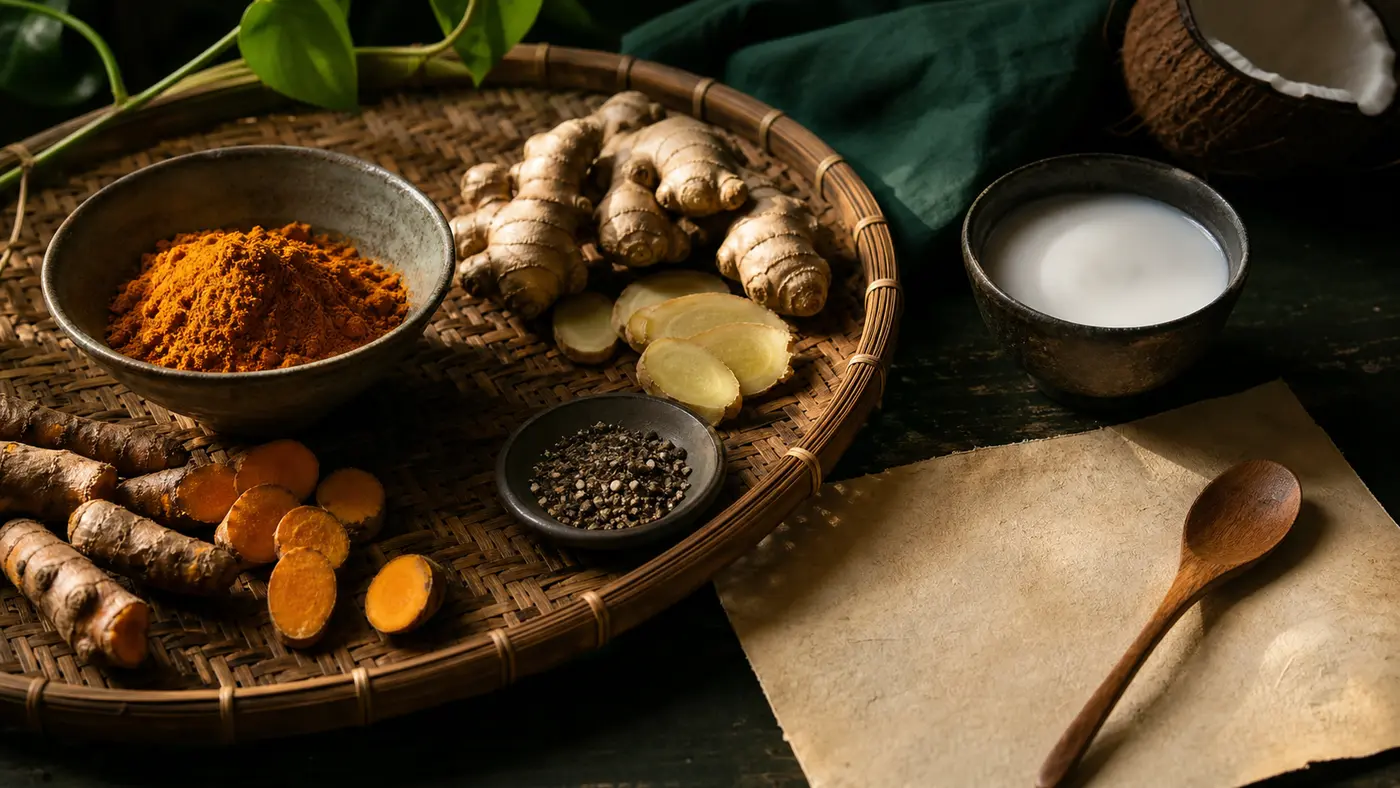
Evidence Summary: What the Research Can and Cannot Say
This article is educational. Supplement trials are not the same as drinking turmeric tea or using turmeric powder in food.
Study Context
Clinical studies usually use measured curcumin preparations, specific study populations, and defined timeframes. Those findings should not be converted into product promises for culinary turmeric.
Practical Takeaway
Use turmeric for its earthy flavour, golden colour, and role in familiar Filipino and Asian recipes. Follow medical advice for diagnosed conditions.
Daily Routines: Practical Ways to Use Turmeric
The easiest turmeric habit is culinary: add a small amount to drinks, rice, soups, stews, or warm milk-based recipes when you want colour and earthy flavour.
- Morning turmeric tea: 1/2-1 teaspoon of Pure Turmeric Powder in hot water with optional black pepper.
- Golden milk before bed: Turmeric in warm milk with coconut oil and black pepper for a richer cup. See the recipe: Golden Milk: A Warm Turmeric Latte Recipe.
- Ready-to-brew blend: Organic 5-in-1 Turmeric Tea Blend combines turmeric with black pepper, ginger, moringa, and lemongrass for convenience.
- Cooking: Add 1/2 teaspoon to rice, curries, soups, or scrambled eggs.
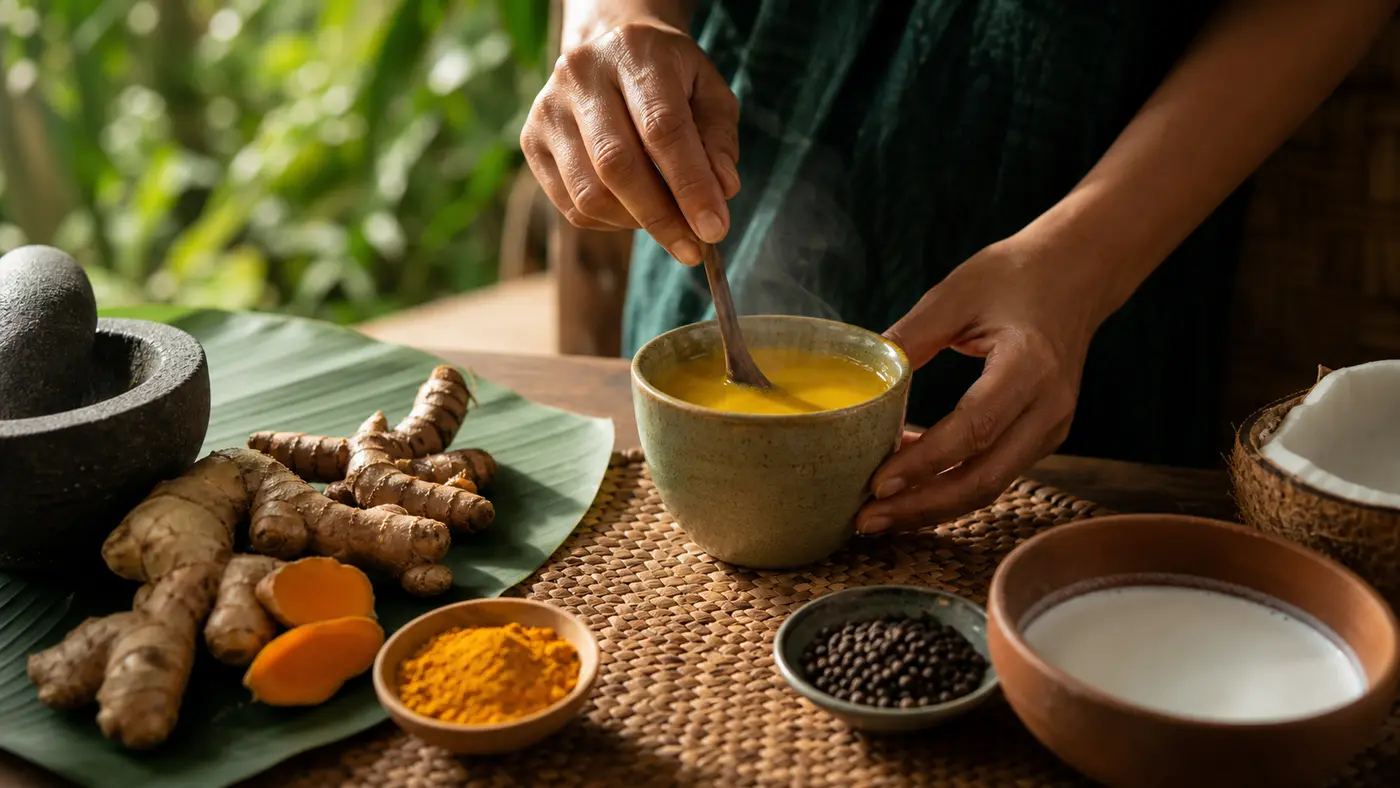
Pairing Turmeric With Ginger and Black Pepper
Black pepper and ginger are common kitchen pairings for turmeric. Pepper adds sharpness, while ginger adds warmth and a citrusy bite.
Combining the two is common in Filipino drinks, golden milk, and spice blends. For a detailed comparison, read: Turmeric vs Ginger: How They Compare.
Forms: Tea vs Powder vs Shot
Different product forms suit different lifestyles and goals:
- Turmeric tea powder (Organic 5-in-1 Turmeric Tea Blend): ideal for daily culinary-range intake; enjoyable as a ritual; gentle in flavour; includes the traditional pepper pairing.
- Pure turmeric powder (Pure Turmeric Powder): versatile for cooking or brewing; allows flexible dosing; best paired with black pepper and fat.
- Power shot (Organic 5-in-1 Power Shot): concentrated, ready-to-consume format; practical when you want a quick daily dose without brewing.
Safety and Interactions
At culinary doses (1-3 grams of turmeric powder daily), turmeric is safe for most healthy adults. At higher supplementation doses, some cautions apply. For the full breakdown of dosage guidelines and who should be careful, read: How Much Turmeric Per Day? A Practical Dosage Guide.
Frequently Asked Questions
Is turmeric a medicine?
No. Culinary turmeric is a spice. Use it for flavour, colour, and tradition, and follow medical advice for diagnosed conditions.
What is the easiest way to use turmeric daily?
Add a small amount to tea, golden milk, rice, soup, or curry. Consistency is easier when the preparation tastes good and fits your routine.
Does Agriko turmeric make medical claims?
No. Agriko turmeric products are food products made from organically grown Philippine turmeric.
Sources
The sources below support the article's discussion of inflammatory markers, knee osteoarthritis studies, bioavailability, and ulcerative colitis research. They are provided for education, not as medical advice.
- The effects of curcumin-containing supplements on biomarkers of inflammation and oxidative stress: a systematic review and meta-analysis of randomized controlled trials.
- Therapeutic effects of turmeric or curcumin extract on pain and function for individuals with knee osteoarthritis: a systematic review.
- Influence of piperine on the pharmacokinetics of curcumin in animals and human volunteers.
- Curcumin in combination with mesalamine induces remission in patients with mild-to-moderate ulcerative colitis in a randomized controlled trial.
- Curcumin formulation review.


